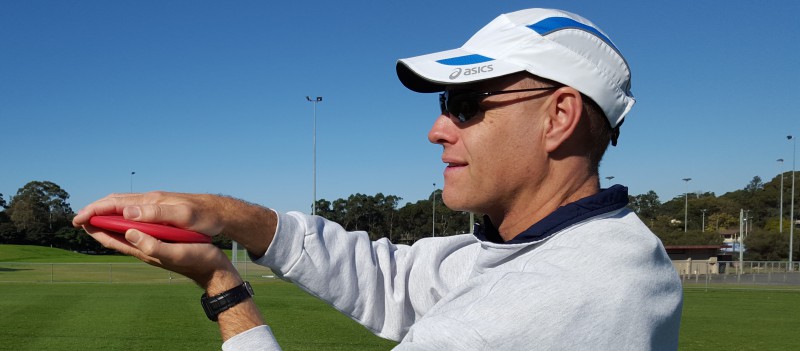
Getting the Feet In The Right Position In The Shot Put
Proper footwork and leg engagement are crucial for generating maximum power in the shot put. During the delivery phase, the athlete’s feet and lower body are the foundation that transfers force from the ground up through the core and into the shot. However, even subtle flaws in foot positioning can compromise an athlete’s throw.
How to Align the Feet
For a standing throw, a right-handed thrower will put their left foot near the stop board. Their right foot will be near the centre of the circle. The left foot’s big toe (near the stop board) should be aligned with the right foot’s instep or heel. This slightly “open” position will allow the hips to properly rotate to the front during the throwing action to help create a strong release.

If the feet are in a “closed” parallel position or the left foot’s heel is in line with the right foot’s big toe, the thrower’s hips will prematurely stop before they are fully around to the front. The hips will not be able to get around the left leg. This will probably result in the throw going out to the right, and a shortened push on the shot.
If the feet are in an excessively open position where the left foot’s toes are not aligned with anything on the right foot, the thrower’s hips will over-rotate past the release point and face too far to the left. This will likely result in a throw down (or over) the left sector line. There will be no blocking action, an effective point of release will be missed and a weak push will be the result.
Where to Point the Feet
When standing in the throwing circle, it is useful to imagine you are looking down on the face of a large clock.
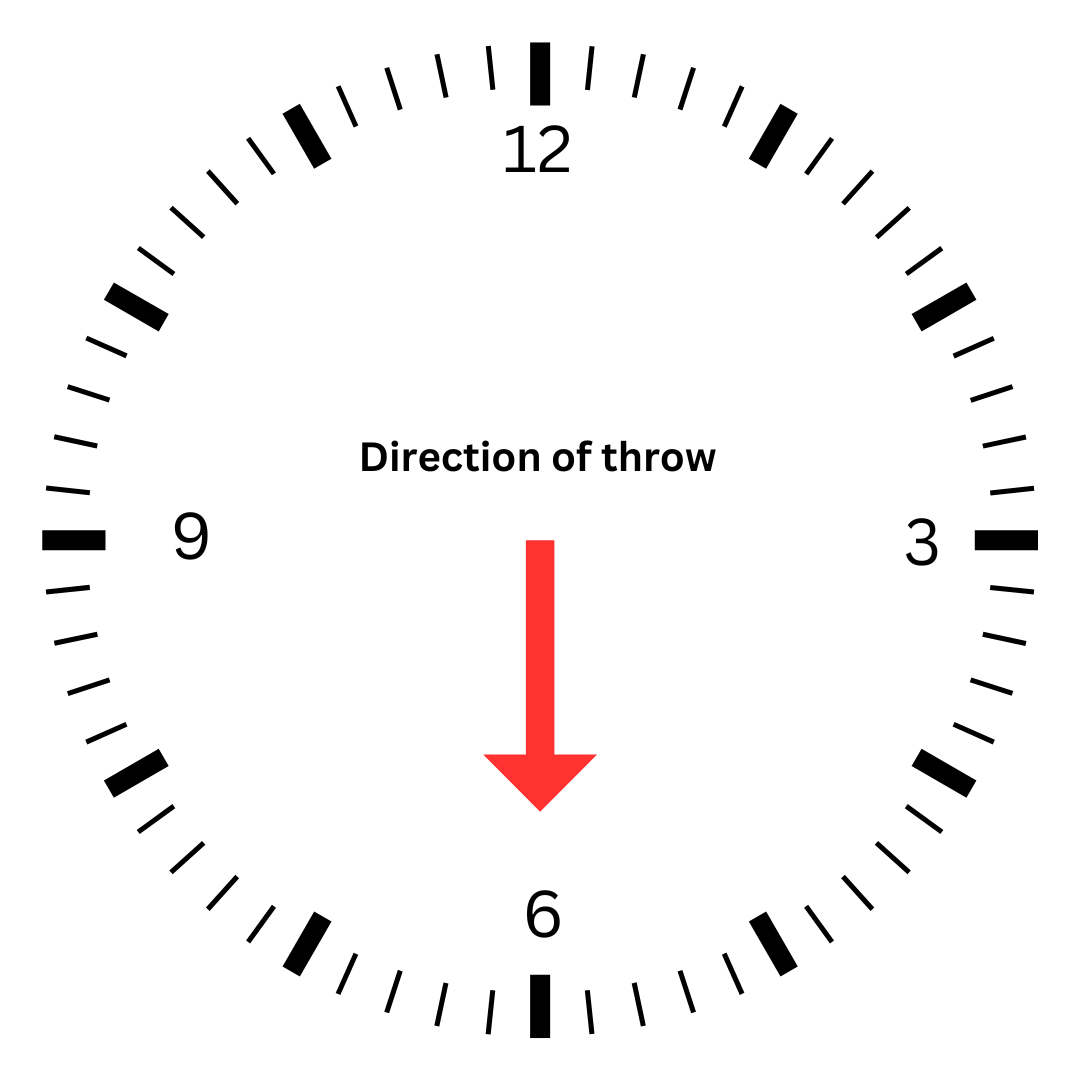
The rear of the circle is 12 o’clock. The front of the circle is 6 o’clock. Therefore, if you stood in the middle of the ring with your back to the direction of the throw, to your left is 9 o’clock; to your right is 3 O’clock.
In the starting stance for a standing throw, the right foot (in the middle of the ring) should be pointed between 9 and 10 o’clock. The left foot should be pointed between 6 and 7 o’clock.
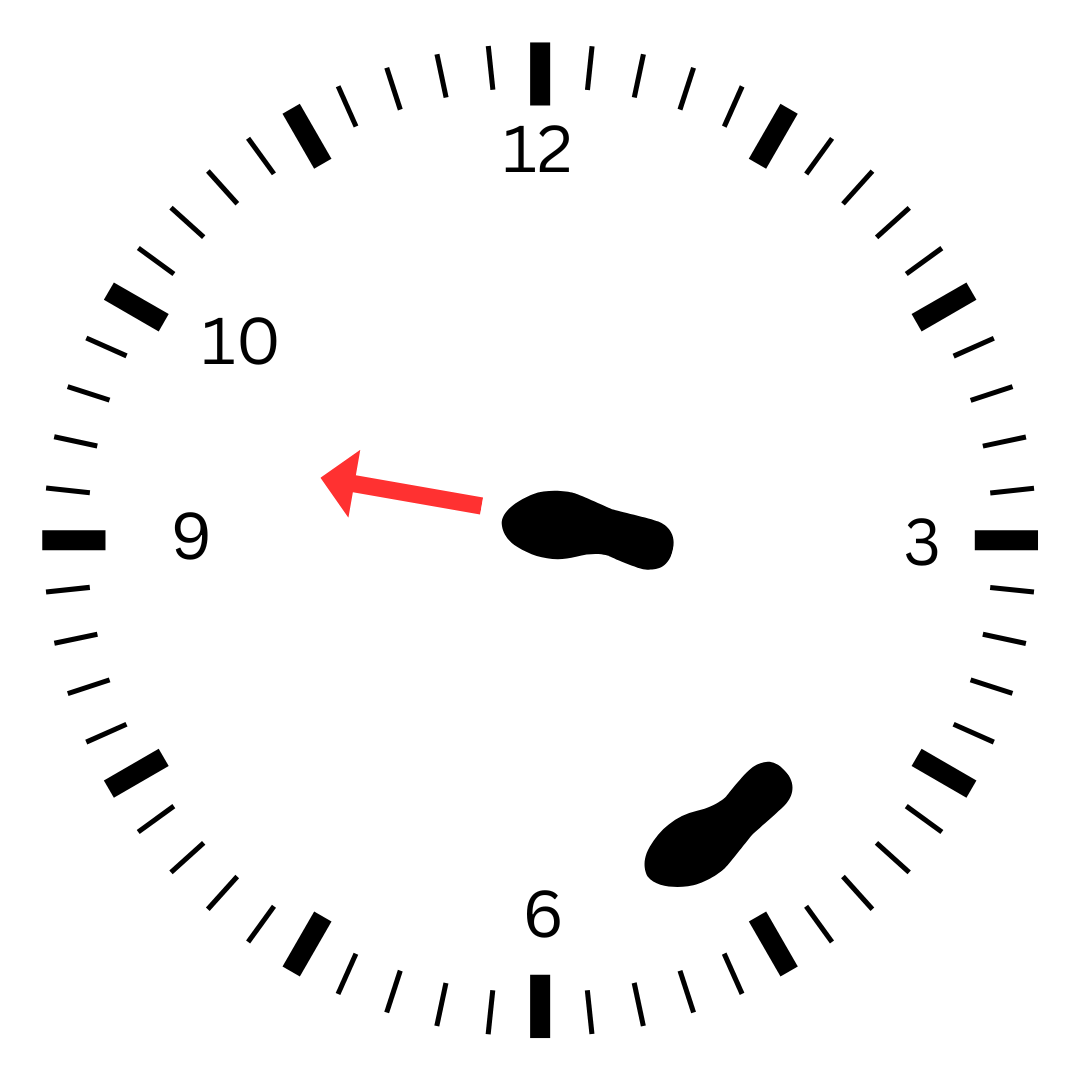
Many kids will point both feet toward the rear of the circle (i.e. 11 or 12 o’clock). This makes it very difficult for the thrower to effectively get their hips around to the front to create a solid delivery stance and a blocking action.
Moving Across the Circle
If a young thrower is going to execute a “shuffle” or step across the circle they will typically start standing at the rear of the circle. Their feet will be pointed at about 12 o’clock.
From the rear of the circle, they must move across the ring to temporarily land in a strong standing throw position. Two key elements of this are:
- Feet in a slightly open position
- The right foot at about 10 o’clock in the middle of the circle
Many kids do the opposite:
- Feet in a closed position
- Right foot still facing backward.
This can result in a throw that:
- Won’t fully engage the legs
- Is misdirected out to the right
- Is awkwardly delivered around and across their body
In conclusion, proper foot positioning is essential for a successful shot put delivery. Whether executing a standing throw or moving across the circle, the alignment of the feet significantly impacts the delivery and release of the shot. Young athletes must maintain a slightly open foot position to optimise hip rotation and generate maximum power. Incorrect foot positioning can lead to compromised throws. Mastering these footwork techniques is vital for any aspiring shot putter.
Frequently Asked Questions
To help you gain a deeper understanding and overcome common challenges, I’ve compiled a list of frequently asked questions. Whether you’re just starting out or looking to refine your technique, these FAQs provide valuable insights and practical tips.
1. Why is foot positioning so important in the shot put?
Proper foot positioning is crucial because it helps generate maximum power, ensures effective hip rotation, and leads to a more accurate and powerful throw.
2. What are the common mistakes in foot positioning for beginners?
Common mistakes include having the feet in a closed parallel position, pointing both feet towards the rear of the circle, or having the feet too wide “open”, all of which can negatively affect the throw.
3. How can young athletes be helped to understand correct foot positioning?
You can use markers or tape to provide visual cues. Videoing throws and reviewing the video can also help athletes understand foot positioning.
4. What exercises can help improve foot positioning in the shot put?
Drills such as standing throws with proper alignment, footwork drills focusing on the clock positions, and balance exercises can help improve your foot positioning.
5. How does improper foot positioning affect the distance of a throw?
Improper foot positioning can lead to a loss of power, ineffective hip rotation, and misdirected throws, all of which can reduce the distance of a throw.
Take The Quiz!
To reinforce what you’ve learned from the article, here is a quiz to test your knowledge and help you solidify these essential concepts. Take a moment to complete the quiz and see how well you grasp the key elements of effective foot positioning in the shot put. All questions assume a right-handed thrower.
1. Why is proper footwork and leg engagement crucial in shot put?
- a) To ensure the athlete looks good while throwing.
- b) To generate maximum power for the throw.
- c) To keep the athlete’s balance.
- d) To impress the officials.
2. For a right-handed thrower, where should the left foot be placed during a standing throw?
- a) Near the centre of the circle.
- b) Near the stop board.
- c) At the back of the circle.
- d) On the right side of the circle.
3. For a standing throw, the left foot’s big toe should be aligned with:
- a) The centre of the circle.
- b) The right foot’s big toe.
- c) The right foot’s instep or heel.
- d) The right foot’s little toe.
4. What happens if the feet are in a “closed” parallel position?
- a) The thrower’s hips will over-rotate.
- b) The thrower’s hips will prematurely stop before fully rotating to the front.
- c) The throw will be more powerful.
- d) The thrower will have better balance.
5. If the feet are in an excessively open position, what is likely to happen to the throw?
- a) The throw will go out to the right.
- b) The throw will go down or over the left sector line.
- c) The throw will be more accurate.
- d) The throw will be higher.
Answers
- b) To generate maximum power for the throw.
- b) Near the stop board.
- c) The right foot’s instep or heel.
- b) The thrower’s hips will prematurely stop before fully rotating to the front.
- b) The throw will go down or over the left sector line.
E-Books by Coaching Young Athletes:
How To Teach Shot Put To Young Athletes E-Book (plus bonus cheat sheet)
Basic Shot Put Rules & Measuring for Schools & Clubs
If this post helped you please take a moment to help others by sharing it on social media. If you want to learn more I encourage you to leave questions and comments or contact me directly.

Darren Wensor is a sports development professional, coach educator, specialist coach of young athletes, and founder of the blog coachingyoungathletes.com. Learn more about him here and connect with him on Twitter, Facebook, Linkedin, or via email. Check out Coaching Young Athletes on YouTube, the Coaching Young Athletes podcast, and the Coaching Young Athletes E-Book Series.
Click here to subscribe for free to the Coaching Young Athletes email list and receive a complimentary mini e-book!
Love what you have read? Behind every article on Coaching Young Athletes lies hours of dedication and passion. Click below to make a one-off donation and help keep the blog going strong. Your generosity makes a difference, no matter the size. Thank you for your support!
Choose an amount
Your contribution is appreciated.
Donate Coaching Young Athletes